
1. What Does Continuously Mean?

Continuously is an adverb meaning in an uninterrupted manner, without stopping or pausing. It can also describe something that proceeds in an ongoing flow.
The word comes from continuous, which refers to something that remains connected or proceeds without interruption.
Simple definition
Continuously means that an action or process continues without a break for a particular period.
Examples:
- The machine operated continuously for twelve hours.
- Water flowed continuously from the pipe.
- She worked continuously to complete the project.
The exact meaning depends on whether the sentence emphasizes uninterrupted duration, ongoing activity, or repeated occurrences.
2. Synonym Hierarchy: Choose the Right Meaning
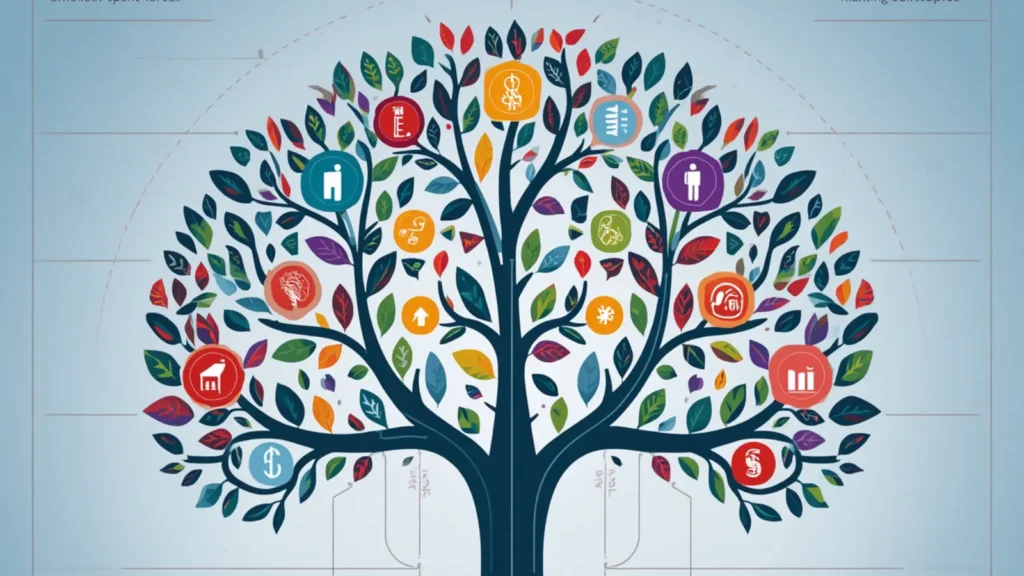
One of the most useful ways to understand synonyms is to organize them according to their semantic relationship with the target word.
Continuously
Ongoing action or activity
No interruption
Continuously · Uninterruptedly · Without pause
Frequent occurrence
Continually · Repeatedly · Again and again
Persistent effort
Persistently · Relentlessly · Constantly
Ongoing progress
Steadily · Consistently · Progressively
This framework prevents a common mistake: treating every synonym as though it expresses exactly the same idea.
3. Best Synonyms for Continuously

The following words are useful alternatives, but their meanings differ slightly.
1
Constantly
Definition: Happening all the time or very frequently.
Tone: Neutral; can express annoyance or emphasis.
Formality: Neutral.
Best contexts: Everyday conversation, professional writing, and descriptions of recurring behavior.
Collocations: Constantly changing, constantly improving, constantly evolving.
Example: Technology is constantly changing.
Usage note: Often implies frequent occurrence rather than strict, uninterrupted duration.
2
Continually
Definition: Repeatedly or frequently over time, often with short interruptions.
Tone: Neutral.
Formality: Neutral to formal.
Best contexts: Academic writing, reports, and recurring events.
Collocations: Continually revised, continually monitored, continually changing.
Example: The policy is continually being revised.
Usage note: The traditional distinction is that continually allows breaks, whereas continuously emphasizes an unbroken flow. In modern English, the distinction is not always strictly maintained.
3
Uninterruptedly
Definition: Without any interruption or pause.
Tone: Precise and objective.
Formality: Formal.
Best contexts: Technical writing, scientific descriptions, and operational reports.
Collocations: Run uninterruptedly, operate uninterruptedly, function uninterruptedly.
Example: The generator operated uninterruptedly throughout the night.
Usage note: This is one of the most exact replacements when uninterrupted duration matters.
4
Steadily
Definition: In a regular, gradual, or consistent manner.
Tone: Positive or neutral.
Formality: Neutral to formal.
Best contexts: Business, education, performance, and measurable progress.
Collocations: Steadily increasing, steadily improving, steadily growing.
Example: Website traffic increased steadily over six months.
Usage note: Steadily describes consistency or gradual change, not necessarily an action that never stops.
5
Persistently
Definition: Continuing firmly despite difficulty, opposition, or delay.
Tone: Determined and resilient.
Formality: Neutral to formal.
Best contexts: Leadership, motivation, personal development, and professional achievement.
Collocations: Persistently pursue, persistently seek, persistently work.
Example: She persistently pursued her career goals.
Usage note: Focuses on determination rather than uninterrupted time.
6
Relentlessly
Definition: Continuing with great intensity without easing or stopping.
Tone: Strong, intense, sometimes negative.
Formality: Neutral to formal.
Best contexts: Persuasive writing, storytelling, leadership, and descriptions of intense effort.
Collocations: Relentlessly pursue, relentlessly attack, relentlessly push forward.
Example: The team relentlessly pursued its objective.
Usage note: Adds intensity and determination. It is not a neutral substitute in every sentence.
7
Consistently
Definition: In a regular, dependable, or reliable manner.
Tone: Positive or neutral.
Formality: Neutral to formal.
Best contexts: Business communication, performance reviews, education, and professional writing.
Collocations: Consistently deliver, consistently perform, consistently produce.
Example: The company consistently delivers high-quality service.
Usage note: Emphasizes reliability or repeated results, not an uninterrupted action.
Additional useful alternatives
| Synonym or phrase | Main emphasis |
| Without stopping | Plain, direct meaning |
| Without interruption | Unbroken activity |
| Ceaselessly | No pause; literary or emphatic |
| Endlessly | Seemingly without an end |
| Perpetually | Ongoing indefinitely or habitually |
| Repeatedly | Happening again and again |
| Regularly | Occurring at consistent intervals |
| Incessantly | Happening without relief; often negative |
| Continuously over time | Ongoing duration |
| On an ongoing basis | Professional and business style |
4. Continuously vs. Continually

This is the most important distinction for learners.
| Feature | Continuously | Continually |
| Core meaning | Without interruption | Repeatedly or frequently |
| Breaks allowed? | Usually no | Yes |
| Focus | Duration | Recurrence |
| Example | The alarm rang continuously. | The alarm rang continually throughout the day. |
| Best use | An uninterrupted process | Repeated events |
Compare:
- The river flowed continuously. — The flow did not stop.
- The river flooded the village continually during the rainy season. — Flooding happened repeatedly, potentially with breaks.
In everyday English, speakers sometimes use these two words interchangeably. In careful technical or academic writing, preserving the distinction improves precision.
5. Continuously vs. Constantly
Both words can mean “all the time,” but constantly is broader and more flexible.
- The server runs continuously. — It operates without stopping.
- The server is constantly being updated. — Updates happen frequently or repeatedly.
Constantly is also common when describing irritating habits:
He constantly interrupts the speaker.
Here, continuously would suggest uninterrupted interruption, which is a different and unusual meaning.
6. Continuously vs. Steadily
These words are especially important in business, finance, analytics, and SEO reporting.
Continuously describes ongoing activity.
Steadily describes consistent or gradual movement.
| Sentence | Meaning |
| Search traffic increased continuously. | Traffic kept increasing without interruption, depending on the intended measurement. |
| Search traffic increased steadily. | Traffic grew at a consistent or gradual rate. |
For most performance reports, steadily is more natural when discussing trends over time.
7. Continuously vs. Persistently
The difference is intention.
- Continuously: Focuses on uninterrupted duration.
- Persistently: Focuses on determination and continued effort.
Examples:
- The rain fell continuously for three hours.
- The researcher persistently investigated the problem.
Rain does not need determination. A researcher can be persistent even when taking breaks.
8. Context-Based Synonym Selection
The best synonym depends on the audience, purpose, and exact meaning.
Synonym decision matrix
Select the meaning you want to express.
An action never stops
Something happens frequently
Gradual, consistent progress
Determined effort
Formal or technical wording
Recommended
Uninterruptedly or without interruption
Example: The system operated uninterruptedly for eight hours.
Everyday conversation
Natural alternatives include:
- Constantly
- All the time
- Continually
- Without stopping
Example: “My phone keeps ringing constantly.”
Professional writing
Use words that express measurable activity or reliability:
- Continuously
- Consistently
- Steadily
- On an ongoing basis
Example: “We continuously monitor website performance.”
Academic writing
Precision is more important than variety. Depending on the research claim, use:
- Continuously
- Uninterruptedly
- Consistently
- Repeatedly
- Progressively
Example: “The samples were continuously monitored during the experiment.”
Business communication
Use clear, outcome-focused language:
- Consistently
- Steadily
- Continuously
- Persistently
Example: “The team consistently met its quarterly objectives.”
Emotional expression
The right word depends on the emotional force:
- Constantly — frequent or ongoing annoyance
- Incessantly — irritating, nonstop repetition
- Relentlessly — intense, forceful persistence
- Endlessly — prolonged duration, sometimes with frustration
Example: “The noise continued incessantly throughout the night.”
Creative and literary writing
More expressive choices include:
- Ceaselessly
- Endlessly
- Perpetually
- Incessantly
Example: “The waves moved ceaselessly beneath the moonlight.”
9. Formality Spectrum
Not all synonyms sound equally appropriate in every setting.
From everyday to literary
Everyday
Simple and natural
All the time
Constantly
Professional
Clear and precise
Continuously
Consistently
Formal / technical
Exact and objective
Uninterruptedly
Continuously
Literary / emphatic
Expressive intensity
Ceaselessly
Endlessly
10. Grammar and Usage Guide
Adverb placement
Continuously commonly appears after the verb or object, or before a participle.
- The machine operates continuously.
- The company continuously improves its services.
- The team has been continuously working on the project.
Both “continuously monitors” and “monitors continuously” are grammatical. The first often sounds more natural in formal writing.
Continuously with progressive tenses
The word works naturally with ongoing actions:
- The patient was continuously monitored.
- The software is continuously evolving.
- The researchers have continuously collected data.
Common collocations
| Collocation | Example |
| Continuously improve | We continuously improve our services. |
| Continuously monitor | Engineers continuously monitor the system. |
| Continuously evolve | Digital marketing continuously evolves. |
| Continuously operate | The facility operates continuously. |
| Continuously update | The database is continuously updated. |
| Continuously learn | Professionals continuously learn new skills. |
| Continuously changing | The continuously changing environment requires adaptability. |
11. Common Mistakes
Mistake 1: Using continually when uninterrupted activity is intended
Incorrect for strict technical precision:
The machine was continually operating without a break.
Better:
The machine was operating continuously without a break.
Mistake 2: Replacing continuously with steadily
These words are not identical.
- The temperature rose steadily. — It increased in a consistent manner.
- The machine ran continuously. — It did not stop.
Mistake 3: Using incessantly in positive contexts
Incessantly often suggests something annoying or excessive.
The child talked incessantly during the lecture.
For neutral writing, continuously or constantly may be more appropriate.
Mistake 4: Confusing continuously with consistently
Consistency refers to reliability or regularity. Continuity refers to ongoing duration.
The employee consistently produces accurate reports.
This does not necessarily mean the employee works without breaks.
12. Antonyms of Continuously
Antonyms express interruption, pauses, or irregular occurrence.
| Antonym | Meaning |
| Intermittently | With breaks between periods of activity |
| Occasionally | Sometimes, but not frequently |
| Sporadically | Irregularly and infrequently |
| Discontinuously | In separate intervals rather than an unbroken flow |
| Temporarily | For a limited period |
| Infrequently | Not often |
| Periodically | At regular intervals |
| Abruptly | Suddenly, often ending or changing an action |
Example:
- Continuously: The signal remained active without interruption.
- Intermittently: The signal appeared and disappeared at intervals.
13. Related Words and Lexical Relationships
Understanding related words helps expand vocabulary beyond memorizing synonyms.
Root
Continue — to keep going or remain in progress.
Adjective
Continuous — uninterrupted or unbroken.
Adverb
Continuously — in an uninterrupted manner.
Noun
Continuity — the state of remaining connected or consistent over time.
Opposite concept
Discontinuity — a break or interruption in continuity.
Vocabulary development
Instead of learning just one synonym, create a word family:
Continue → Continuous → Continuously → Continuation → Continuity
This approach helps learners understand how word forms change according to grammar and context.
14. Expressions and Phrases
Useful phrases related to continuously include:
- All the time — happening very frequently or continuously.
- Without a break — without interruption.
- Without interruption — in an unbroken manner.
- Day and night — continuously throughout the day and night.
- Around the clock — continuously, twenty-four hours a day.
- On and on — continuing for a long time.
- Nonstop — without stopping.
Examples:
- The support team operates around the clock.
- The rain continued on and on.
- The machine ran nonstop for several hours.
15. Synonyms in SEO and Content Writing
In SEO blogging, synonym selection should improve clarity rather than artificially repeating keywords.
Example: Repetitive sentence
The website continuously improves, continuously updates, and continuously changes its content.
Improved version
The website evolves over time, regularly updates its content, and steadily improves the user experience.
The revised sentence is more readable because each verb expresses a distinct idea.
Practical SEO writing tips
- Use continuously when describing uninterrupted processes.
- Use steadily for gradual increases or measurable growth.
- Use consistently for dependable results.
- Use continually for repeated changes or revisions.
- Use persistently when emphasizing determination.
- Avoid forcing synonyms into sentences where their meanings do not fit.
Semantic SEO is not about inserting as many related words as possible. It is about communicating the intended meaning accurately and naturally.
16. More Contextual Examples
Education
- Students continuously develop their language skills through practice.
- Teachers continually revise their lesson plans.
- Her academic performance improved steadily.
Leadership
- Effective leaders consistently communicate their goals.
- The manager persistently supported the team.
- The organization continuously adapts to new challenges.
Customer service
- Our support team continuously monitors customer requests.
- We consistently provide timely assistance.
- The company continually improves its customer service process.
Marketing
- Consumer preferences are constantly changing.
- The campaign steadily increased brand awareness.
- Marketers continuously analyze audience behavior.
Public speaking
- The speaker maintained a continuously calm tone.
- She consistently delivered clear presentations.
- He persistently advocated for educational reform.
17. How to Choose the Most Natural Synonym
Before replacing continuously, ask three questions:
Three-question editing test
- Does the action happen without a break? Choose continuously or uninterruptedly.
- Does it happen repeatedly, with possible breaks? Choose continually, repeatedly, or constantly.
- Am I describing progress, reliability, or determination? Choose steadily, consistently, or persistently.
The most natural synonym is the one that preserves the original meaning while matching the sentence’s tone.
18. Frequently Asked Questions
What is the closest synonym for continuously?
The closest general synonym is constantly. However, uninterruptedly is often the most precise alternative when an action occurs without any pause.
What is the difference between continuously and continually?
Continuously generally means without interruption, while continually usually means repeatedly or frequently, potentially with breaks.
Is constantly a synonym for continuously?
Yes, in many contexts. Both can express ongoing or frequent activity, but constantly does not always imply an unbroken process.
What is a formal synonym for continuously?
Uninterruptedly is a formal and precise alternative. Continuously itself is also suitable for academic, technical, and professional writing.
What is the opposite of continuously?
Common antonyms include intermittently, sporadically, occasionally, and discontinuously.
Can continuously and steadily be used interchangeably?
Not always. Continuously emphasizes ongoing duration, whereas steadily emphasizes consistent or gradual movement.
What is a synonym for continuously improving?
Depending on the meaning, use steadily improving, consistently improving, continually improving, or progressively improving. Steadily improving is especially natural for measurable progress.
Is continuously an adverb?
Yes. Continuously is an adverb formed from the adjective continuous.
What is the pronunciation of continuously?
Continuously is pronounced /kənˈtɪnjuəsli/ in standard British and American English. The main stress falls on the second syllable of continuous.
How can I avoid repeating continuously in an article?
First determine whether you mean uninterrupted activity, frequent change, gradual progress, or persistent effort. Then choose a synonym that expresses that specific meaning instead of replacing the word randomly.
Conclusion
The word continuously describes ongoing action without interruption, but its best synonym depends on the intended meaning.
Use constantly for broad everyday usage, uninterruptedly for precise continuous activity, continually for repeated events, steadily for gradual progress, and persistently for determined effort.

Isaac Reynolds is a dedicated vocabulary analyst and English content contributor. He researches word origins, meanings, and contextual usage to provide accurate and useful language resources for learners and writers around the world.
